
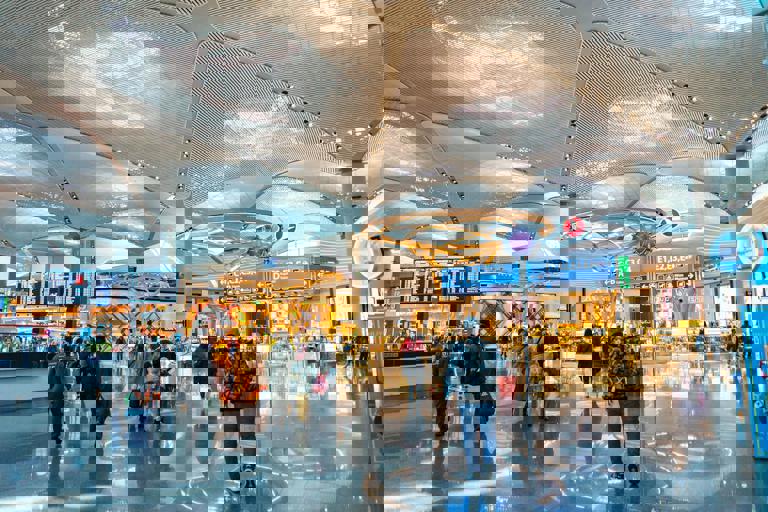
Security at Kuala Lumpur International Airport (KLIA) intensified this week following the discovery of an enormous sum of undeclared cash being transported by two female travelers. Airport officials, conducting routine inspections, uncovered over four million Malaysian Ringgit and almost two hundred thousand US dollars concealed within their suitcases. This incident, which unfolded in the customs inspection area, has sparked major discussions about money laundering and border controls in Malaysia.
According to customs authorities, the women—whose identities have not been disclosed due to ongoing investigations—were flagged for additional screening when their luggage appeared unusually heavy during baggage checks. Upon opening the suitcases, officers found stacks of bills meticulously wrapped and arranged to avoid detection. "Such a substantial amount of undeclared currency raises significant red flags about the intent behind its movement," stated a KLIA customs spokesperson.
Carrying large sums of cash across international borders is strictly regulated in Malaysia as part of its ongoing efforts to curb money laundering and illicit financial flows. The law requires any individual entering or departing Malaysia to declare amounts exceeding MYR 30,000 (approximately USD 6,400). The case involving these two travelers grossly surpassed the legal limit and triggered immediate legal proceedings.
In the wake of this discovery, authorities have launched a comprehensive investigation to uncover the source and intended destination of the funds. Early reports indicate that the women had arrived from a neighboring Southeast Asian country, but officials are not ruling out the possibility of more extensive, transnational involvement. Financial crime experts underscore the importance of such investigations, as large sums like this often indicate broader illegal networks.
Customs and security officials are collaborating with Bank Negara Malaysia and international counterparts to trace the funds. "Efficient inter-agency coordination is pivotal in dismantling criminal financial syndicates," explained Rahman Ismail, a senior analyst specializing in financial crimes. The authorities are reviewing surveillance footage, scanning electronic device records, and leveraging financial intelligence units to build a comprehensive picture of those involved.
Members of the public have voiced concerns about airport security and whether additional measures will be implemented to prevent similar incidents in the future. In response, KLIA management has pledged to increase random inspections and invest in more advanced scanning technology. "Security is our utmost priority," said a spokesperson, "and we will further tighten our protocols to ensure the integrity of Malaysia’s borders."
The incident also cast a spotlight on the laundering of illicit funds through physical cash movement, a method believed to be on the rise despite digital banking advancements. According to a 2023 report by the Global Financial Integrity, Southeast Asia remains a hotbed for cross-border cash smuggling, prompting international agencies to recommend stricter enforcement and better training for customs officials.
Legal experts emphasize the serious legal consequences for failing to declare large sums of cash at border entries. Under Section 23 of Malaysia’s Anti-Money Laundering Act, offenders could face fines up to three times the amount seized or imprisonment. "These laws are crucial to maintaining the integrity of the financial system and deterring criminal enterprises," noted lawyer Amirul Hanafi, who specializes in financial offenses.
The two suspects are currently being detained while authorities seek clarification on the origin of the money and whether additional charges might apply. Their legal representation has yet to release a public statement. Meanwhile, customs officials have reiterated calls for travelers to comply with declaration requirements, highlighting that failure to do so undermines national security and could result in severe penalties.
As the investigation continues, this high-profile seizure has renewed focus on Malaysia’s role as a transit and destination country for illicit financial flows. Authorities stress the importance of vigilance, both from officials and the traveling public, in safeguarding the nation’s interests. While additional facts are expected to surface in the coming weeks, this case serves as a stark reminder of the ongoing battle against financial crime at the country’s gateways.